

It was a scene straight out of the apocalypse: thick coils of barbed wire surrounded the crumbling hilltop, shards of dry, discarded stone crunching under our feet. 900 feet below, a highly toxic pool filled with water the color of the Statue of Liberty silently melted away at the hillside. A siren wailed as our group stepped through a gate in the fence, then a rifle blast echoed through the mile-long gorge. The remnants of old mine elevators stood watch over us like iron giants. Unfazed, our highly knowledgeable tour guide, Pat Cunneen, sarcastically exclaimed, “Welcome to the idyllic Berkeley Pit!”
The Berkeley Pit: a Lesson in Disaster
It was the third day of the 2023 Trout Unlimited Teen Summit. From our home base at Georgetown Lake in Anaconda, Montana, the group of 24 passionate youth fly fishers and conservationists made the trip to Butte to tour the Berkeley Mine Pit, one of the largest Superfund sites in the nation. After days in the pristine Montana wilderness, the run-down mines in the greater Butte area came as a bit of a shock to the system. The shock was a necessary one though, as it demonstrated just how devastatingly barren an ecosystem can become when we don’t care for it.
In 2016, a massive flock of migrating snow geese landed on the “lake” that has filled in the pit. After just a short time of exposure, an estimated 4,000 geese were killed by burns from the pit’s toxic water. That highly toxic mine runoff is responsible for the demise of what was once one of the most fertile and biodiverse regions in the western United States, the Clark Fork watershed. The incident with the geese was just one of countless environmental disasters that have ravaged the greater Clark Fork ecosystem, making it uninhabitable for most fish and other aquatic species for decades. Ironically, all of the fishing we did during the Summit took place in the Clark Fork watershed, a testament to the resiliency of nature and the power of environmentalism.
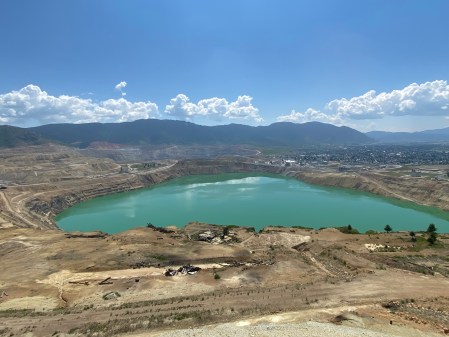
The battle to mitigate the mines’ damage to the surrounding landscape has been ongoing for over 40 years. There was a year-long stint between the pit’s closure in 1982 and its designation as a Superfund site in 1983 when the pit sat festering like a centuries-old gash in Butte’s once-unspoiled mountains. It quickly filled with groundwater, creating the blue-green “lake” we see today. Early instances of dying migratory birds, even before the snow geese massacre, sounded the alarm on the measures necessary to protect wildlife. The sirens and rifle blasts we heard walking in are part of a program to deter birds from the pit. Since 2019, water has been pumped out of the pit and treated, then discharged into nearby Silver Bow Creek.
Our tour of the Berkeley Pit was just one of many eye-opening activities we participated in during our five days at the Summit. As such a vast state with so much variety in landscape and culture, there was plenty for us to explore across southwest Montana. Coming from the lowlands of New England, I was amazed by the immense beauty we were surrounded by every day. Anywhere we went, snow-capped peaks were always visible in every direction. Sometimes the mountainsides were blanketed in a thick carpet of conifers, but more often they were wide-open grasslands, opening up to bare rock at higher elevations. Wildlife was prevalent, from the moose and bald eagles that frequented our camp to the mule deer and coyotes we saw on our commutes.
And, of course, there were plenty of fish. As many devoted anglers are already aware, Montana is famous for discontinuing the stocking of its rivers in 1974. This means that every fish we caught in moving water was of stream-born origin. While most of the state’s creeks and rivers naturally support clean water, diverse habitat, and healthy fish populations, there are some that needed a little TLC to get there.
Exploring & Fishing Silver Bow Creek
For instance, Silver Bow Creek, which is the major drainage of the Butte mines, was (surprise, surprise) severely degraded by toxic mine runoff. Before the arrival of mining pioneers, the Salish Tribe used to describe the river as “the place where you shoot them in the head” (the “them” being westslope cutthroat trout, bull trout, and mountain whitefish). But then for over 100 years, it was essentially treated as an industrial sewer for the mines, the health of the watershed completely disregarded. Silver Bow became fishless, and the downstream Clark Fork nearly met the same fate.
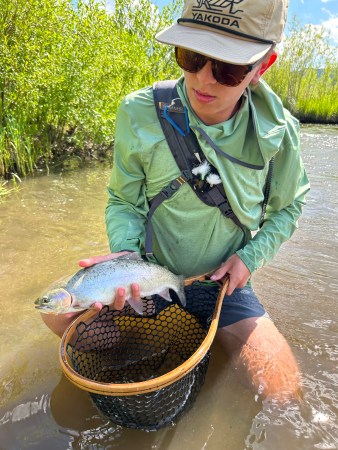
In 2008, after years of restoration work, a meager “couple of” westslope cutthroat and brook trout were found near the mouth of German Gulch Creek. But to fisheries biologists who had spent much of their careers waiting for this very moment, it was a massive success. Since then, over 23 miles of the creek’s riparian zone and stream channel have been remodeled and restored. Fish numbers have slowly rebounded, to the point where our group was able to fish the creek with some limited success. While I managed to fool a couple of small cutthroats and a brook trout, it was my buddy Sawyer’s 14-inch cutthroat that proved the fishery was at its healthiest in decades.
Building Dams for Conservation
There are also some waters with clean water and intact riparian zones that rank as decent fisheries, but lack the diversity and prevalence of fish-holding habitat to make them truly impressive. On one such water, a tiny mountain stream no more than four feet across in most places, our group completed a service project to improve fish habitat. Our objective was to construct a series of analog beaver dams – essentially man-made made versions of the real thing. Beaver dams not only play an important role in creating deep pools for aquatic wildlife refuge, but also in spreading and cooling water. The dams force water underground, which continuously seeps back into the stream as springs. During dry spells, this spring seepage is crucial in maintaining a healthy flow level and cool water temperatures.
The group broke up into crews of four or five, each striving to win the unspoken competition for the “best” beaver dam. Tess Scanlon, Trout Unlimited’s Rock Creek Project Coordinator, along with field technicians from the US Forest Service, taught us the basics of building these simple dams. We began by weaving willow and alder branches through hardwood stakes already secured in the ground. To fortify the branches, we wedged in sediment and stones. The result was a tightly-knit dam that backed up the water, but remained permeable to fish and other aquatic life. As we worked, we’d often spook small pods of cutthroats playing in the pools, reminding me of the brookies back home. By the time we finished, many of these trout skirted through the pools we had just created like building inspectors, validating the integrity of our work.

World-Class Fishing
As a group of diehard anglers, the highlight of the trip for most of us was the world-class fishing southwest Montana had to offer. On the first night, the group headed down to the shores of Camp Watanopa and Georgetown Lake. The fish in the lake were the only stockers we’d see for the next four days, but they sure didn’t act like the pellet pigs back home. Though I hooked and promptly broke off a nice rainbow on a Bionic Ant, it was my buddy Lucas who managed the only “real” fish that night, a chunky 18-inch leech eater. As the sun set, we had a blast messing around with an endless school of fingerling rainbows and watching our backs for “the locals”, a family of moose.

The next day, after finishing the analog beaver dam project earlier than expected, we enjoyed some surprise fishing time on nearby Flint Creek. While most freestones in New England are rocky and high-gradient, Flint was much more of a low-gradient meadow stream. Getting a good drift was made slightly more challenging by the late-runoff flows, but the resident browns were mostly happy to eat a well-presented Chubby or nymph tight to the cut banks.
As already mentioned, the third day had us fishing Silver Bow within the city limits of Butte. While I initially discredited the river as being artificial and human-engineered much like the Swift River in Massachusetts, the wild fish and natural setting changed my mind. It is true that the creek faced some rough times that required a great deal of human intervention to fix; however, the native plants, restored floodplain, and natural meander helped it fit right in with all of the other fisheries we explored.
On our final full day, the group headed to the Middle Fork of Rock Creek, a trip that had been talked up throughout the entire week. Thankfully, it lived up to the hype. The fishing started out a little slow, with the occasional small cutthroat eating our foam bugs. But as the light began to fade and the temperature dropped, the most epic hatch I have ever experienced was just getting started. Meaty green drakes popped through the surface en-masse, spurring a feeding frenzy from the fish below.
My fishing partner, Benton, and I settled into a long run chock-full of hungry cutties. Fish from eight to eighteen inches erupted across the surface, engulfing any unassuming insects in their path. I had fun playing with plenty of eight-to-thirteen-inchers, losing the occasional fourteen or sixteen when it shot downstream into the raging current.
Benton, on the other hand, seemed far more adept at landing his larger quarry. His only two fish that day were both beautifully-colored westslope cutthroat trout. The belly of his second was so fiery orange that it would rival any autumn brook trout. Both fish came up to eat a small Chubby Chernobyl, the same one I had purchased at last year’s Summit in North Carolina, and that had caught my biggest Swift River brown last July. Call it a lucky fly, I guess!
Forever Friendships
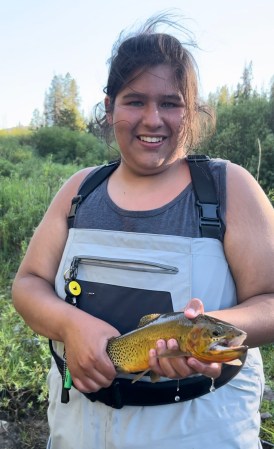
By the final day, our group had become a tight-knit family. By far, the best part of the Summit is the connections you make. As all of us have expressed, it’s not easy finding other teens as passionate about fly fishing and conservation. Through the Summit, we have an incredibly rare opportunity to meet other kids that share the same interests and experiences. Though all of us may live in different states across the country, my buddies from last year’s Summit and I continue to chat nearly every day. Truthfully, the five days of fishing and conservation together turns into lifelong friendships.

So the next time you hear someone complain about our sport being filled with a bunch of old, white men, remember there is a diverse generation of young anglers looking to prove that narrative wrong. And if you’re one of those young anglers looking to connect with other teens that share your passion, feel free to reach out. Next year’s Summit will be here before we know it – and I can’t wait!
 Current Angler
One thought on “2023 TU Teen Summit”